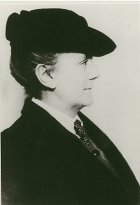
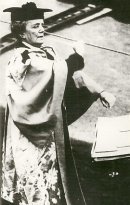
07.03.2016 - Music by Ethel Smyth for World Women's Day on the March 8th 2016
In 1911 Ethel Smyth decided to dedicate herself intensively for two years to the struggle for women’s suffrage. She explained her engagement by the fact “that as a woman composer I know a bit more than most other people about the dreadful effect of prejudice, and it is precisely for the music – in other words, for the sake of my soul – that I cannot do otherwise”.
She soon made friends with the suffragette Emmeline Pankhurst and her daughters Christabel and Sylvia. When in 1908 a demonstration was staged in Hyde Park by their organization, the WSPU, The Times estimated the number of participants at 500,000 – an unbelievably large gathering even for London! (In 1910 the conservatives then wanted to grant the right to vote only to well-to-do women above the age of thirty-two.)
This was all at a time in which a distinguished physician seriously could proclaim in The Times that quarrelsomeness was a symptom of mental disease, and the widely read Italian criminologist Lombrose described even the “normal” woman as a criminal being. The Sunday Review quite simply considered educated women to be “vermin”.
Ethel Smyth, who was a friend of the authoress Virginia Woolf, stood up for women’s interests like only a very few female artists of her time.
Here is a short excerpt from a talk given by Virginia Woolf to the National Society for Women’s Service in 1931: “She is of the race of pioneers, of pathmakers. She has gone before and felled trees and blasted rocks and built bridges and thus made a way for those who come after her. Thus we honour her not only as a musician and as a writer, bur also as a blaster of rocks and the maker of bridges. It seems sometimes a pity that a woman who only wished to write music should have been forced also to make bridges, but that was part of her job and she did it”.
Hearing>>> Hearing>>>

LAST Change: 7307__troubadev
(18.07.2014 - 14:25 Uhr)
CMS myty by tyclipso.net ©2005
troubadisc.de a belle artes project