New release
June 2016
Karl Amadeus Hartmann's works for unaccompanied violin
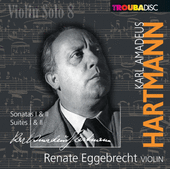
This new recording by Renate Eggebrecht marks only the second time that Karl Amadeus Hartmann's complete works for unaccompanied violin have been released on disc. At the same time it is unique, for it is the first to take Hartmann's autograph scores into account. Besides a good many insubstantial variants, the musical text also contains a number of crucial changes, some of which considerably alter the sound of the music. Hartmann wrote these two suites and two sonatas in a single burst of creativity in 1927 at the age of 22. As a result, they number among his earliest surviving compositions altogether. With a burning curiosity for everything new and an absoluteness that left a deep imprint on his musical language, he explored all the styles en vogue at the time, always with an open mind.
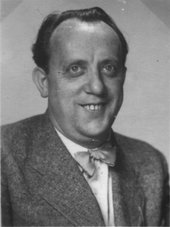
The year 1933, when the National Socialists seized power in Germany, is widely viewed as the key moment in Hartmann's musical evolution. In many respects this is certainly true, for his music unquestionably became more taut and concentrated. Apparently abandoning all traces of instrumental experimentation, shrill provocation, parody and social satire, he composed his First String Quartet in 1933-34 as a response to the Nazi takeover and the initial persecution of the Jews. But on closer inspection his early music likewise reveals crucial stylistic features that lastingly affected his oeuvre.
For example, the fourth movement of Sonata I contains the initial statement of a motif that has found its way into musicological parlance as a 'Klagechiffre' – an emblem of lamentation. In 1939 Hartmann used this very motif, a synonym for grief and lamentation, to open his Concerto funebre for violin. But he also gave his earliest music a terse linguistic character in a manner analogous to spoken language. To explore the roots of this musical language, it is essential to look at the influences he absorbed during its years of origin. Above all his experience of the Jewish Habimah theatre must be seen as formative: the synagogue chants, the Jewish folk tinges in the incidental music and its melismatic melodic writing made a deep impression on the young composer. He discovered something foreign and exotic, and yet felt that this something was latent in his own being. His use of the Jewish folk song Elijahu hanavi became especially important: in Hartmann's music it becomes virtually a symbol for the annihilation of the Jewish people while also standing for the suppression, persecution and killing of all opponents of the régime. He blended this and other Jewish melodies fully into his own idiom and employed them in all his works. For Hartmann, this was more than an act of solidarity and empathy: it was a deliberate 'counteraction' against the powers that be.
A closer inspection of Hartmann's two suites and two sonatas for unaccompanied violin reveals still further influences. In his memoirs he mentions the deep impression left on him by Paul Hindemith's Sonata for solo viola, op. 25, no. 1. It thus comes as no surprise that the young composer refers to it directly in the third movement of Sonata I ('insanely fast, ugly') and in the fourth movement of Sonata II ('very wild and coarse in delivery') even though the internal gestures of the music already part ways with Hindemith's idiom. Propulsive rhythms, gasping, choppy, obsessive tonal repetitions and dynamic extremes seem to depict the interior struggles of a human soul in adversity – and already hint at Hartmann's later music. In all four works Hartmann adopts Baroque principles of organisation. Both Sonata I and Suite I begin and end with contrapuntal forms such as fugue (plus toccata), canon and chaconne. Hartmann never forsook canon and fugal techniques in his later music, especially to depict mental imbalance within a carefully preserved exterior order. After Bach and Reger, he was probably the first to impose such unusually complex contrapuntal textures on the violin.
As in Hartmann's music as a whole, the slow movements, usually flanked by madcap fast movements, form emotional antitheses and almost visceral centrepieces. The third movement of Sonata II – a meditative hymn encompassing 81 bars – is one of the most profound in the entire tetralogy. Here Hartmann spreads an interior world before our eyes and almost prophetically foretells the horrors to come.
The polar opposition of vitality vs. grief is applied in both areas to produce sharp contrasts. It proves to be the true motivating force from which Hartmann developed his field of creative tension. He continuously frees himself from traditional resources of form and workmanship to create his own motivic structures, which he associates with a specific message, thereby generating the fractures inherent to his musical language. The emotional force of this language, the compression and intensity of its structures, the enormous escalations of tempo and dynamics lend Hartmann's music characteristic traits entirely his own and an intensity of language whose immediacy we instantaneously recognise and never forget.
Andreas Hérm Baumgartner
MusicWeb International
In one creative outburst in 1927, at the age of only twenty-two, Karl Amadeus Hartmann penned the four solo violin works we have here. Personal circumstances and an indefatigable self-critical attitude with his early compositional efforts resulted in them lying dormant for sixty years. They had to wait until the mid 1980s to be premiered and 1988 to be published. What kick-started them in the first place was probably a chance hearing of Paul Hindemith's Solo Sonata for Viola, Op. 25, No. 1. It left a deep and lasting impression on the young Hartmann and he decided to chance his arm on something similar for violin. It could have been a risky venture as he was a trombonist, yet he seems to have been fully conversant with the limitless possibilities of the fiddle. Hindemith's influence is particularly evident in the third movement of the Sonata No. 1 and the fourth movement of the Sonata No.2.
Much of the music's interest lies in the colourful imaginative harmony that Hartmann employs. Highly dissonant and angular, it borders tonality without taking that final step into the atonal reaches. Most of it is highly dramatic and occasionally sounds mercilessly severe and brutal, as in the second movement of the Second Sonata, where the music is relentlessly savage and unforgiving. Even the Jazz finale of Suite No. 2 is unsmiling and strident.
J.S. Bach was without doubt a profound influence on the young composer, and his Solo Sonatas and Partitas provide a model and inspiration. Hartmann chooses titles such as toccata, fugue and chaconne. His fugal writing is skilful and impressive. A fine example is the second movement’s intensely chromatic Fuge in the Suite No. 1, adept and fluent in its writing. He also takes a leaf from Bach's book in his dance-like movements.
Eggebrecht pays tribute to Hindemith in her short ‘encore’ with the 4th movement from his Sonata Op. 31, No. 2.
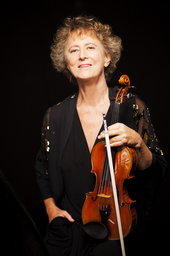
Both Alina Ibragimova and Ingolf Turban have recorded Hartmann's solo violin oeuvre, but I've yet to hear them. Renate Eggebrecht has been afforded a top notch acoustic, where the clarity of the music's lines isn't muddied in any way, but emerges clearly defined. Her astonishing musicality and virtuosity make a strong case for this exacting music. The accompanying annotations, in English and German, supply more than enough information.
Stephen Greenbank
http://www.musicweb-international.com/classrev/2017/Oct/Hartmann_violin_TROCD01447.htm

LAST Change: Friedemann Kupsa
(05.02.2019 - 19:06 Uhr)
Webdesign VehemenZa
CMS myty by tyclipso.net ©2005
troubadisc.de a belle artes project
Sonatas and Suites for violin solo (1927)
from the autographs
Paul Hindemith (1895-1963)
Sonata op.31 no.2 for violin solo (1924)
4th movement: Variations on "Komm lieber Mai" (W.A. Mozart)